
Turn daily planning into a shared decision
Connect work status to ownership and next action.
- Model roles, states, and record ownership
- Create a shared surface for planning and action
- Produce operational reporting from traceable data
ERP and operations solution
A useful operational system does more than store data; it shows what is moving, who owns it, and what evidence supports the next decision.
An operational system should connect planning, resources, records, quality, and daily action rather than simply adding more forms. Good design makes state concise and understandable for each role without losing the follow-up path.
Real product view
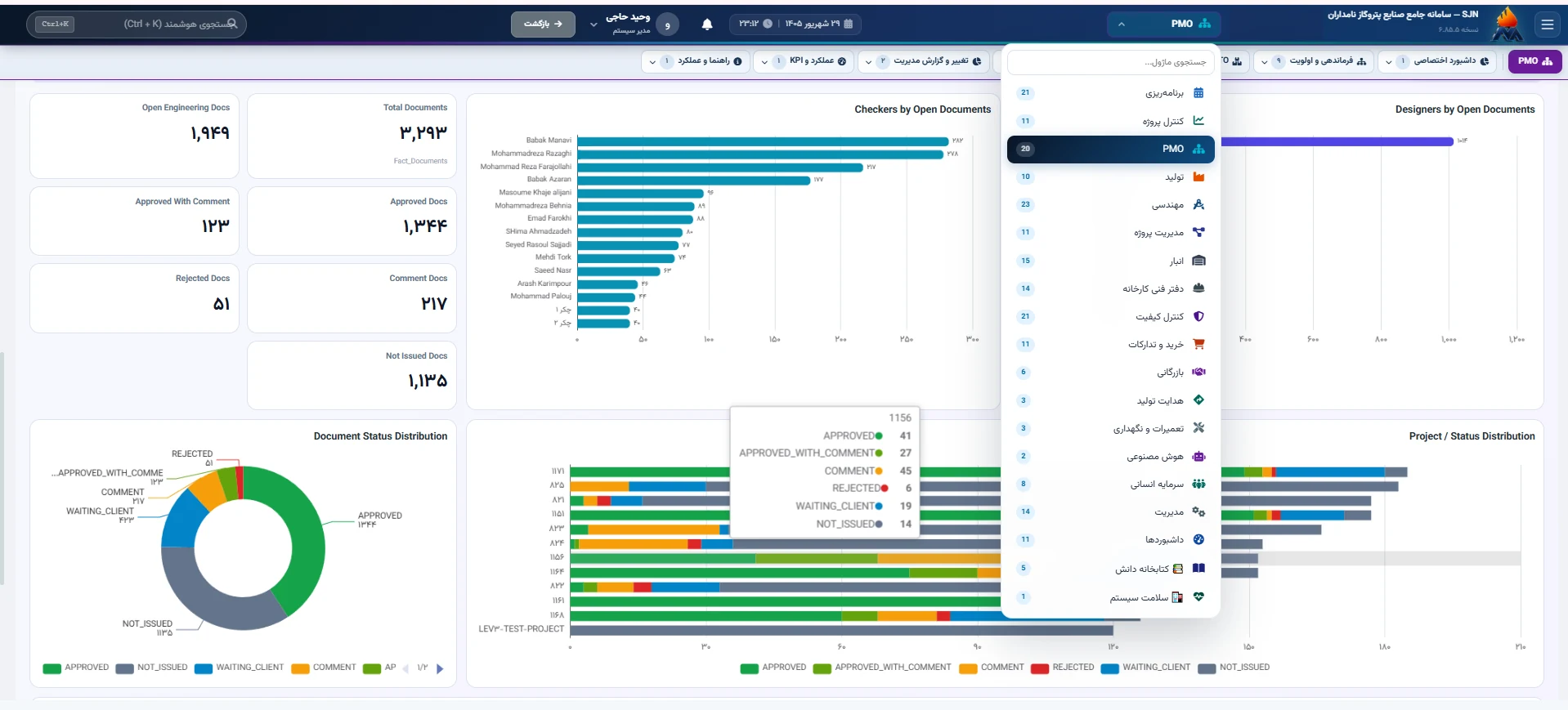
This is a real SJN/PMO dashboard view, showing documents, project control, ownership, and indicators together in the operating surface.
Product evidence
A status view matters when it connects to a record, role, and next action; this image shows that product surface.
Solutions
From role and data models to dashboards, forms, and approval flows, the operational surface should match the organisation’s real rhythm. We shape one coherent source for entry, status control, and reporting.
Turn daily planning into a shared decision
PRODUCTION
This is not only a production dashboard; it creates a connected path from document, revision, material, schedule, work release, real action, quality, and the next decision—the connected execution model in the Production reference.
ERP CONTINUITY
Engineering, material, schedule, and production data often remain split across separate surfaces, forcing teams to reconstruct context manually. A useful ERP operating surface follows the real path from entry to decision and action.
SJN EXECUTION
SJN connects projects, PMO, engineering, planning, production, QC, procurement, and management visibility in one operating surface; status is not only displayed, it clarifies who takes the next step and with which record.
ENGINEERING EVENT
An engineering revision has operational value when its impact on material, schedule, procurement, production, and quality is connected. This path turns an approved change from a detached notification into an actionable, traceable event.

RELEASE CHAIN
Revision, approval, material readiness, schedule release, and work-order status should stay in one chain. When a record is approved, its effect on work permission, material gates, and the next action should be visible instead of discovered in a separate meeting.

PLANNING TO ACTION
WBS, predecessors, capacity, and personnel allocation become operational when a supervisor or worker can see the assignment, its prerequisites, and the evidence needed to report progress. Planning stays connected to project controls while reaching the executable task.

CONFIRMED ACTUALS
When the authorized worker confirms actual start, actual finish, progress, and activity status in the workflow, project controls rely on data close to its source instead of retrospective reconstruction. Confirmation, ownership, and evidence stay beside the progress signal.

Competitive advantages
The advantage is not the number of modules; it is the connection between role, state, record, schedule, material, and the next action.
Revision and approval do more than create a record; they change material readiness, schedule status, and work permission.
Managers, engineers, planners, procurement, QC, and execution teams see the right level from one operating record.
Owner, timestamp, revision, approval, and downstream impact stay together so status does not require manual reconstruction.